
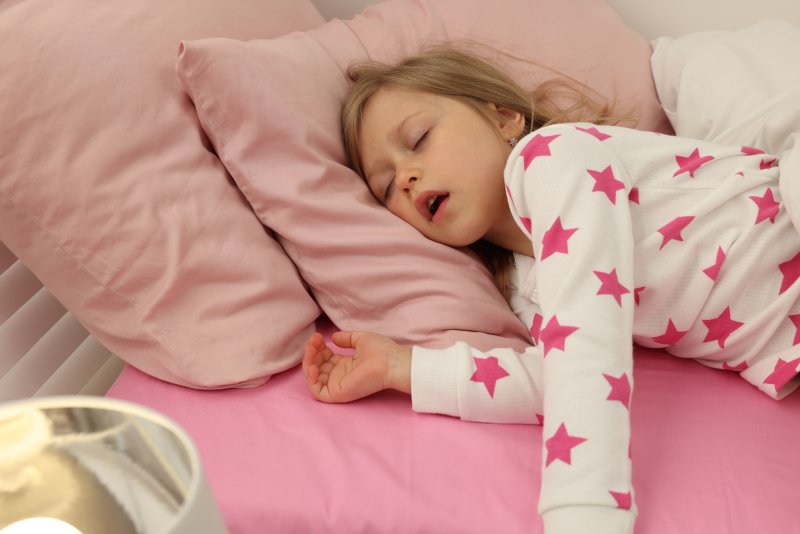
Mouth breathing is not a normal habit; in fact, it is often a sign that a more serious sleep-breathing disorder might be the problem. Unfortunately, the inability to breathe through one’s nose while asleep is not an issue found only among suffering adults. It also occurs among children. Learn why this problem should not be avoided and what you can do to help your child start breathing better.
What Causes Mouth Breathing?
There are many reasons why mouth breathing occurs. Choosing to address the issue early reduces the risk of more serious physical and behavioral problems, including snoring, restless sleep, and misbehavior at school or at home.
Some of the most common causes of mouth breathing include:
- Enlarged adenoids and tonsils
- Chronic nasal congestion
- Deviated septum
- Narrow nasal passage
What Can Happen As a Result of Mouth Breathing?
If you see that your child breathes through their mouth while asleep, it can lead to various consequences that negatively affect their overall health and well-being, including:
- Sleep-breathing disorder or disrupted sleep patterns
- Daytime fatigue
- Difficulty concentrating
- Misbehavior
- Difficulty remembering things
- Facial development that alters their jaw and tongue position
- Poor tooth alignment
- Dry mouth that can lead to cavities, tooth decay, gum disease, and bad breath
How Can Your Child’s Dentist Help?
It might seem odd to take your child to their dentist to have them checked for sleep-breathing disorders; however, they are likely to have advanced knowledge and experience treating these issues, often with a more comfortable approach.
Depending on their dentist and their preferred treatment method, they may recommend:
- A frenectomy of a lip or tongue-tie impacts your child’s ability to breathe freely through their nose.
- A custom oral appliance that shifts the jaw forward slightly to create a more stable environment so that your child no longer suffers from the inability to breathe freely through their nose.
It’s also possible that your child might require surgical intervention to remove enlarged tonsils and adenoids. Regardless of the recommendation, trust that your child will receive the treatment they need to finally get the rest they deserve.
About the Author
Dr. Mahmoud Homsi knew he wanted to be a dentist at the age of 19. After graduating from Boston University, Henry M. Goldman School of Dental Medicine, he completed advanced continuing education courses at the Las Vegas Institute, focusing on full mouth rehabilitation and TMJ/sleep apnea therapy. Treating patients of all ages at Charm Smile Dental, he can help even the youngest individuals breathe better and sleep more soundly throughout the night. Visit our website or call (603) 228-0123 to schedule an appointment if you believe your child might have sleep apnea.