While it’s easy to assume that sleep apnea is something that only happens to adults, the truth is that children can develop it as well. As a parent, you should take whatever steps you can to ensure that your little one is getting the quality sleep they need to grow up healthy and be at their best at school. To that end, it’s worth taking the time to familiarize yourself with the warning signs of sleep apnea in children, as well as what options are available for treatment.
What is Sleep Apnea in Children?
Having sleep apnea means that your child’s breathing is repeatedly stopping and restarting while they’re asleep. In many cases, sleep apnea is the result of the airway being obstructed. In children, this is often caused by enlarged tonsils or adenoids, but it can also be a side effect of a lip or tongue-tie.
Every time your child’s breathing is interrupted, their brain forces them to wake up for air, which disrupts the sleep cycle. Needless to say, this can make it very difficult for them to get quality rest.
What are the Warning Signs of Sleep Apnea in Children?
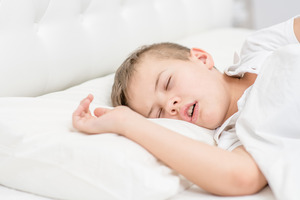
If you observe your child while they’re sleeping, you may observe some of the possible warning signs of sleep apnea. Symptoms to keep an eye out for include snoring, mouth breathing while asleep, noticeable pauses in breathing, gasping for air, and teeth grinding.
Your child may also show signs of sleep apnea during their waking hours. They may be more hyperactive and impulsive than normal, and they might have trouble focusing. You may also find that they’re unusually irritable or prone to mood swings.
Bear in mind that even if you recognize the potential warning signs of sleep apnea, the only way to properly diagnose the problem is to have a sleep test performed. Once it’s confirmed that your child is suffering from sleep-disordered breathing, you can start exploring your treatment options.
How is Sleep Apnea in Children Treated?
The best treatment for sleep apnea in children can vary depending on the underlying cause of the disorder. For example, if your child has a lip or tongue-tie that’s affecting their breathing, they may benefit from a frenectomy. This is a procedure that involves removing any excess tissue that is restricting lip or tongue movement.
If you have an older child, a customized oral appliance may be a good fit for them. Oral appliances can help move the lower jaw slightly forward, which helps keep the airway open and reduces the chances of breathing interruptions occurring.
Sleep apnea can wreak havoc on your child’s health and quality of life, but if you keep a careful eye out for the warning signs, you can get them the care they need to overcome their sleep-disordered breathing and enjoy more restful nights again.
About the Author
Dr. Mahmoud Homsi is a graduate of the Boston University Henry M. Goldman School of Dental Medicine, and he has earned a fellowship from the Academy of General Dentistry. He has completed continuing education courses covering a number of topics, including sleep apnea therapy. At Charm Smile Dental in Concord, he offers solutions for sleep-disordered breathing for patients of all ages. If you think your child may have sleep apnea, you can schedule an appointment with Dr. Homsi by visiting his website, using his online booking tool, or calling (603) 228-0123.